I was out today and two young guys were behind me, friends obviously and goofing around, and one suddenly called the other a Nazi. “Get lost, Nazi,” he said, laughing and pushing his friend. They were two completely decent looking 18- or 19-year olds and I was stunned that they broke this tabu. Of course the term is used often by non-Germans as the ultimate insult. It’s thrown around lightly these days, too, with Greeks calling Germans Nazis, or calling Angela Merkel a Nazi, or whomever.
But for Germans, outside of historical context, it’s a no-fly zone. When these two used it, it was so unexpected I had to laugh, and they were laughing, too, knowing they were stepping over a well-patrolled boundary.
It reminded me, oddly, of two black people fooling around call each other 'nigger' - that frowned-upon put-down, made innocuous for some as insider banter. There are worlds between the words, it goes without saying: one being a criminal, the other a victim, one having once been an official moniker, the other a condescending insult. And I surely don’t think Germans calling each other Nazis is going to gain any currency. Still, hearing it used was a kind of relief, like acknowledging the elephant in the room, and the laugh was the relief of tension.
Wednesday, February 29, 2012
Thursday, February 23, 2012
right-height trees
Though not a Romney fan, my father enjoyed his quote about trees being the right height. He likes the idea - says it's a kind of found poetry. But it's a bit short for poetry, even for haiku, so I looked up the quote and found more, out of which came this found poem.
Michigan
I come back to Michigan.
I like seeing the lakes. Something special,
the Great Lakes, but also all the little inland lakes
that dot the parts of Michigan.
I come back to Michigan: the trees
are the right height.
I love the lakes. Brownish-green,
the grass is the right color.
I love being in Michigan.
Everything seems right.
Politicians seem to be masters of the deeply inane. Who knows what the right height is for trees? Romney, the sage, accidental poet, does. On the way home from work I sized up the trees. Some of them seemed insecure about their height. Others were too loose, too tight, or too symmetrical. Some had a freakish branch jutting out at an uncomfortable angle without a proper counterweight.
Michigan
I come back to Michigan.
I like seeing the lakes. Something special,
the Great Lakes, but also all the little inland lakes
that dot the parts of Michigan.
I come back to Michigan: the trees
are the right height.
I love the lakes. Brownish-green,
the grass is the right color.
I love being in Michigan.
Everything seems right.
Politicians seem to be masters of the deeply inane. Who knows what the right height is for trees? Romney, the sage, accidental poet, does. On the way home from work I sized up the trees. Some of them seemed insecure about their height. Others were too loose, too tight, or too symmetrical. Some had a freakish branch jutting out at an uncomfortable angle without a proper counterweight.
Monday, February 20, 2012
Grotesquerie

The holiday this year coincides with my reading of The Tin Drum. Like carnival, The Tin Drum in shocking in places with its dwarves, eels, onions & potatoes, horseheads as fishing tools, incest and invading armies, and also outrageous, and very engaging. Along with the story, I like the particularly German things that come up, like school-going "cornucopias" (Schultüten), which I wouldn't have understood if I hadn't had children here, and the famous fizz powder sweet, a stand-in for sexual climax in the book.
Anyone who knows anything about The Tin Drum knows it is about the rise of the Nazis, and the post-war years in Germany. The protagonist is a supposedly insane dwarf, who decided at three to stop growing and remain a child, and there of course are all the Germans who had no responsibility for anything in their society.
This is the year I penciled in to read more German/ic and Germany-related literature, and this seems a good start. Here's part of the first chapter, the creation scene, which leads us right into the distorted grotesque: My grandmother had on not just one skirt, but four, one over the other. It should not be supposed that she wore one skirt and three petticoats; no, she wore four skirts; one supported the next, and she wore the lot of them in accordance with a definite system, that is, the order of the skirts was changed from day to day. The one that was on top yesterday was today in second place; the second became the third. The one that was third yesterday was text o her skin today. The one that was closest to her yesterday clearly disclosed its pattern today, or rather its lack of pattern: all my grandmother Anna Bronski's skirts favored the same potato color. It must have been becoming to her.
Wednesday, February 15, 2012
plans, schemes
someday i will write it all down in greater detail
someday i will write it all down in greater detail
someday i will write it all down in greater detail
someday i will write it all down in greater detail
someday i will write it all down in greater detail
Tuesday, February 14, 2012
Thumb Theater
I treated myself to a mac, and it is a lovely machine, clean and easy. But I am having a terrible time without Word. Apple has many programs for writers (too many) - Pages, iA Writer, Ommwriter, Text Edit etc - but it is difficult to make the transition. I almost gave in and bought Word yesterday, and even now I wonder why didn't I, but the Apple store convinced me to come in for a Pages class. It is not hard to use, but I want to save things in Word, or send them in Word, and I have run into one obstacle after another. For example, the computer accepts my password for some applications, but not others, so I can't set up my mail account. I only have one password! Then there's the question of where the hell are my files when I save them. MUST FIGURE OUT.
I was hoping to write more, not spend the evenings feeling defeated.
So, ironically, for now I am back to writing poems exclusively on paper. Page after page of the same poem with a slight change in each new version, like those flipbooks you hold in one hand while flipping through the pages with the thumb of the other to see a horse run, a head turn, or a star explode.
Kind of defeated the purpose of the new computer.
Happy Valentine's Day. I heart Word.
More flipbooks:
Break dance
Close up
Louis Vuitton
Tuesday, February 07, 2012
Unseen
Despite my choice of the kind sepia tone in the video below, I'm trying to modernize. Over the past couple days I've learned how to make audio files, convert photo files, use iTunes for more than music, and here's my first (fidgety) iPhoto video. Primitive! I'll take it down in a couple days to protect my secret identity. Ironically enough, this is my poem "Unseen," from my chapbook.
Monday, February 06, 2012
more fan love
Of Wislawa Szymborska’s poems, most American poetry readers are familiar with the one called “Could Have,” sometimes titled “Any Case,” which for some became almost an allegory of the 9/11 tragedy. If I’m not wrong, the New Yorker (?) printed the poem over a picture of the WTC, sealing its fate as a 9/11 poem. It’s an excellent poem, though its writing predates the terrorist attack and refers to the Holocaust, a tragedy of a much larger scale. (She later DID write a 9/11 poem, “Photograph from September 11.”) But the good thing about Szymborska’s poems is their seeming simplicity makes them like Colorforms, peel them off one situation and stick them on another. They leave lots of room. She ignores poetry workshop directives like, “Get all the senses in there! Did it smell like nutmeg?! Was the sky slateblue or greengrey!”
When Szymborska died last week, I didn't blog about her, though she’s a favorite of mine. I didn’t feel I had anything to add besides more fan love. Then I read this blog at Slate this morning, clicking in when I saw “the Szymborska poem above my desk,” fully expecting to see “Could Have” and finding instead “ABC!” That was refreshing.
All this is leading up to the fan love I promised and my favorite Szymborska poem – "Contribution to Statistics". This was the first Szymborska I ever read. It appeared years ago, before she won the Nobel Prize, in the Frankfurter Allgemeine Zeitung, a newspaper that sometimes prints poems. Of course it was in German, as “Beitrag zur Statistik,” and because I first read the poem in German, it remains for me far superior to the two English translations I’ve since read. (One even uses a baseball metaphor – “not even in the ballpark” – which makes me groan in dismay. Sport metaphors!)
Anyway, I liked the Slate blog about the Szymborska poem that enjoys a “place of honor” hanging above the writer's desk, because “Contribution to Statistics/Beitrag zur Statistik” has a shrine in my home, too. However many years ago I cut it out of the paper, plonked it into a frame and hung it next to the mirror in my bedroom, or in all four bedrooms I’ve had since then.
When Szymborska died last week, I didn't blog about her, though she’s a favorite of mine. I didn’t feel I had anything to add besides more fan love. Then I read this blog at Slate this morning, clicking in when I saw “the Szymborska poem above my desk,” fully expecting to see “Could Have” and finding instead “ABC!” That was refreshing.
All this is leading up to the fan love I promised and my favorite Szymborska poem – "Contribution to Statistics". This was the first Szymborska I ever read. It appeared years ago, before she won the Nobel Prize, in the Frankfurter Allgemeine Zeitung, a newspaper that sometimes prints poems. Of course it was in German, as “Beitrag zur Statistik,” and because I first read the poem in German, it remains for me far superior to the two English translations I’ve since read. (One even uses a baseball metaphor – “not even in the ballpark” – which makes me groan in dismay. Sport metaphors!)
Anyway, I liked the Slate blog about the Szymborska poem that enjoys a “place of honor” hanging above the writer's desk, because “Contribution to Statistics/Beitrag zur Statistik” has a shrine in my home, too. However many years ago I cut it out of the paper, plonked it into a frame and hung it next to the mirror in my bedroom, or in all four bedrooms I’ve had since then.
Sunday, February 05, 2012
Crush
As if writing a poem weren't hard enough, then comes submitting. Sometimes, despite having some favorite zines, I don't know where to begin. A good way out of the 'where to?' question can be to find a poet you like, find out where their new poems are, and try there, too. I do this!
I find Duotrope also a big help. I look at "recent responses" for new publications and also to refresh my memory. Recently I saw Birdfeast start up, and I thought, oh, not another zine with a bird name. But I checked it out and the 'bird' referred to 'flipping the bird,' and it just seemed a desirable home for a poem, and I was lucky to have one accepted. Funny enough, I also checked out Thrush, yet another bird name, and thought it would be girly love and nature poetry but looks (and names) deceive and it is full of terrific poems. They rejected me, but I will try again.
Then come the cases of cool-sounding zines that have sleek and savvy layouts, and are full of poetry you think is bad! Not 'not my thing' bad but downright weak. This is disappointing.
Considering all the time and thought that goes into submitting, beyond writing the poem, I think I'll just lie back and suck plastic grapes and wait until the publications come knocking at my door. Um, more plastic grapes please...
For those who celebrate, V-Day is a week or so away, and Poetry Crush has a feature up on erotic poems. They asked the writers who are publishing with Hyacinth Girl Press to choose a favorite and write a little intro. Mine is ee cummings, and there is a rich and varied selection of other poets too. Enjoy.
I find Duotrope also a big help. I look at "recent responses" for new publications and also to refresh my memory. Recently I saw Birdfeast start up, and I thought, oh, not another zine with a bird name. But I checked it out and the 'bird' referred to 'flipping the bird,' and it just seemed a desirable home for a poem, and I was lucky to have one accepted. Funny enough, I also checked out Thrush, yet another bird name, and thought it would be girly love and nature poetry but looks (and names) deceive and it is full of terrific poems. They rejected me, but I will try again.
Then come the cases of cool-sounding zines that have sleek and savvy layouts, and are full of poetry you think is bad! Not 'not my thing' bad but downright weak. This is disappointing.
Considering all the time and thought that goes into submitting, beyond writing the poem, I think I'll just lie back and suck plastic grapes and wait until the publications come knocking at my door. Um, more plastic grapes please...
For those who celebrate, V-Day is a week or so away, and Poetry Crush has a feature up on erotic poems. They asked the writers who are publishing with Hyacinth Girl Press to choose a favorite and write a little intro. Mine is ee cummings, and there is a rich and varied selection of other poets too. Enjoy.
Thursday, February 02, 2012
the balls off a brass monkey
It is -8C here or worse, which is about 17F to us Americans. Cold! The gypsies are nevertheless camped out across from the train station, sitting Indian style on their mattress with a blanket around them. At least until around 11 pm when the guy in the Mercedes comes to pick them up. He brings them back before the crack of dawn.
Anyway, yeah. Cold! Well-digger's ass! Witch's tit! Cold as hell. Cold as all get-out. Eskimo's chuff! Whatever that is.
My poem "Sidewalk Rage" is up in the new Snakeskin, which is all found poems. I admit Sidewalk Rage has also found me occasionally, most often when I'm behind the dope & her friend standing side-by-side on the escalator in the train station where I am trying to catch my train.
Anyway, yeah. Cold! Well-digger's ass! Witch's tit! Cold as hell. Cold as all get-out. Eskimo's chuff! Whatever that is.
My poem "Sidewalk Rage" is up in the new Snakeskin, which is all found poems. I admit Sidewalk Rage has also found me occasionally, most often when I'm behind the dope & her friend standing side-by-side on the escalator in the train station where I am trying to catch my train.
Monday, January 30, 2012
Injuns
When I first moved to Germany I was surprised when people told me they had visited or planned to go to New England for Indian Summer, as if it were a sure thing. How did they calculate, I wondered. I wondered aloud, and found out what they meant was 'foliage season,' when trees turned colorful as a headress full of feathers. It was easy to understand where the mistake was made.
Still, I tried to explain what Indian Summer really was - that time of year when the heat creeps back, although you thought autumn had started, a bout of hot weather usurping the season, unexpected and unwelcome. It was than that I first made the connection between Indian Summer and 'Indian giver.'
This backstory was more difficult to explain, and eventually I gave up. I know where the expression comes from, but I let the Germans keep their own, though the imprecision irks. Am I lazy, or just dismayed by the effort of explaining, or is it worse than that? Is Indian Summer = foliage season a semantic whitewash?
Still, I tried to explain what Indian Summer really was - that time of year when the heat creeps back, although you thought autumn had started, a bout of hot weather usurping the season, unexpected and unwelcome. It was than that I first made the connection between Indian Summer and 'Indian giver.'
This backstory was more difficult to explain, and eventually I gave up. I know where the expression comes from, but I let the Germans keep their own, though the imprecision irks. Am I lazy, or just dismayed by the effort of explaining, or is it worse than that? Is Indian Summer = foliage season a semantic whitewash?
Thursday, January 26, 2012
Safe Landings
Mark Wahlberg caused a ruckus recently when he claimed history would have been different had he been on the plane from Boston that crashed into the WTC on 9/11. He was supposed to be on one of the two, but rescheduled shortly before. He dreams frequently of his would-be heroism: If he’d been on board, he says, he’d have stormed the cockpit and kicked some terrorist ass.
While I appreciate the sentiment, how can anyone know the circumstances, assess the danger and opportunities, and above all know oneself –one's reactions, the thoughts that would go through your head, the power of fear– enough to judge what he’d do? In these days of easy heroism (local girl picks up baby sister at school!), I wouldn’t discourage the real thing, but how to make such claims hypothetically? Maybe because of your kids’ being on board, or the deal you’re about to close, or your crush on Tanya at your office, you wouldn’t dare anything at all? Most people hope for a best-case outcome. No one on the plane from Boston knew his fate.
(It’s interesting that Wahlberg has that German last name because if he’d been born, say, 90 years ago, we could have counted on him to take Hitler out. Too bad! ... but I’m having fun at his expense.) In his favor, he has since apologized. We all appreciate the sentiment, but we also benefit from hindsight. And the adrenaline of imagination. Still, there’s a lot of injustice out there, so he needn’t be disappointed he missed his chance to right wrongs. Opportunities abound.
Anyway, I heard all this and I'd have put it away in my mental clutter cabinet, except Wahlberg’s outburst coincided with the wreck of the Costa Concorida and its weasely captain. The wreck also brought up comparisons to the Titanic, and my colleague who covers the insurance industry and has a pet interest in cruises, sent me a link about second mate Lightoller, whom I’d never heard of and now ask myself why (boy walks dog for sick mom!). When the Titanic captain told him to get into one of the lifeboats, he refused. Instead when there was nothing left to stand on he dove into the ocean, after having packed as many women and children into the lifeboats as he could. Some think he misunderstood "women & children first" as "women & children only." Still, a hero in my book.
While I appreciate the sentiment, how can anyone know the circumstances, assess the danger and opportunities, and above all know oneself –one's reactions, the thoughts that would go through your head, the power of fear– enough to judge what he’d do? In these days of easy heroism (local girl picks up baby sister at school!), I wouldn’t discourage the real thing, but how to make such claims hypothetically? Maybe because of your kids’ being on board, or the deal you’re about to close, or your crush on Tanya at your office, you wouldn’t dare anything at all? Most people hope for a best-case outcome. No one on the plane from Boston knew his fate.
(It’s interesting that Wahlberg has that German last name because if he’d been born, say, 90 years ago, we could have counted on him to take Hitler out. Too bad! ... but I’m having fun at his expense.) In his favor, he has since apologized. We all appreciate the sentiment, but we also benefit from hindsight. And the adrenaline of imagination. Still, there’s a lot of injustice out there, so he needn’t be disappointed he missed his chance to right wrongs. Opportunities abound.
Anyway, I heard all this and I'd have put it away in my mental clutter cabinet, except Wahlberg’s outburst coincided with the wreck of the Costa Concorida and its weasely captain. The wreck also brought up comparisons to the Titanic, and my colleague who covers the insurance industry and has a pet interest in cruises, sent me a link about second mate Lightoller, whom I’d never heard of and now ask myself why (boy walks dog for sick mom!). When the Titanic captain told him to get into one of the lifeboats, he refused. Instead when there was nothing left to stand on he dove into the ocean, after having packed as many women and children into the lifeboats as he could. Some think he misunderstood "women & children first" as "women & children only." Still, a hero in my book.
Tuesday, January 24, 2012
reading notes
Not long ago I finally finished Moby Dick. I admit there would have been an acute danger of failing to finish it if I hadn't been in an internet group dedicated to it, if I hadn't been one of the leaders of aforesaid group. Yup, "reading in public!" The pressure. I am very glad to have read it now; it was worth the while. When you're somehow involved with Melville, he seems to turn up everywhere - this, today, for example.
Afterwards, quite exhausted, I had a quick romp with The Curious Incident of the Dog in the Nighttime, which had a good plot but which I found so-so. It was a fast read, though, which is often a plus point. To me it seemed like YA literature, though I understand that wasn't its original category. My take: skippable, unless you have an interest in Asperger's Syndrome.
 Now I'm reading The Tin Drum and feeling underwhelmed after my high expectations. What I think of wistfully nearly every day is re-reading The French Lieutenant's Woman, which I loved last year. I even pulled it out this morning and re-read the first couple pages. Later in the day I talked to my mom who spent four hours in a doctor's waiting room today reading something I'd recommended, which turned out to be this! I could have cried. My only problem with my copy, I remembered this morning when I pulled it out, is the goofy cover with cutesy girlwoman playing peekaboo.
Afterwards, quite exhausted, I had a quick romp with The Curious Incident of the Dog in the Nighttime, which had a good plot but which I found so-so. It was a fast read, though, which is often a plus point. To me it seemed like YA literature, though I understand that wasn't its original category. My take: skippable, unless you have an interest in Asperger's Syndrome.

Friday, January 20, 2012
the what
“Thank you for sending us your poems; we are sorry to say they are not what we are looking for.”
What: substansive
What: a question word demanding definition
What: “that which”
What: (adv.) in a great or surprising manner, e.g. what a poem!
What: a thing inherently unspecified
(for further reference: whatever, whatsoever, whosiewhat, whatchamacallit)
Do you remember the riddle about the fisherman’s daughter, who was to come both dressed and undressed? In what was she un/dressed?
“When you have what we are looking for, please let us know.“
(it has yet to be fingerprinted)
What: substansive
What: a question word demanding definition
What: “that which”
What: (adv.) in a great or surprising manner, e.g. what a poem!
What: a thing inherently unspecified
(for further reference: whatever, whatsoever, whosiewhat, whatchamacallit)
Do you remember the riddle about the fisherman’s daughter, who was to come both dressed and undressed? In what was she un/dressed?
“When you have what we are looking for, please let us know.“
(it has yet to be fingerprinted)
Wednesday, January 18, 2012
Why you cannot sing 'Dem Bones' in German
The Scheitelbein's connected to the Hinterhauptbein
The Hinterhaupbein's connected to the Schläfenbein
The Schläfenbein's connected to the Unterkiefer
The Unterkiefer's connected to the Zwischenkieferbein
The Zwischekieferbein's connected to the Gesichtsschädel
ach nein, it just don't flow...
Thursday, January 12, 2012
Word Thursday
The little figure of the die is one of my favorites.
It is so neat and dotted, intact and self-contained, and yet with so many tentacled implications.
It's a loaded word, too, as dice can be loaded, hiding the fatal verb in it. I also like that die’s plural is dice. There’s nothing like the die-dice pair.
The mice don’t have their mie.
Advice has no advie, and rice must walk this world alone, or at least as a collective singular.
Another word I like is stacks, as in library stacks, which has no singular. Such stacks in fact are not stacked at all, ideally, but lined up in rows. For stacking stacks you need a used book shop or a plate of pancakes.
But what brought all this up was another word that I read today and meant to take note of, but now slips my mind. It’s like this morning, I put a pan of milk on the stove to warm and when I came back to get it the pan was nice and warm but there was no milk in it.
And now I remember the word: absentminded. It struck me funny. I wanted to give it a hyphen, but the dictionary says no. Perhaps I knew that.
It is so neat and dotted, intact and self-contained, and yet with so many tentacled implications.
It's a loaded word, too, as dice can be loaded, hiding the fatal verb in it. I also like that die’s plural is dice. There’s nothing like the die-dice pair.
The mice don’t have their mie.
Advice has no advie, and rice must walk this world alone, or at least as a collective singular.
Another word I like is stacks, as in library stacks, which has no singular. Such stacks in fact are not stacked at all, ideally, but lined up in rows. For stacking stacks you need a used book shop or a plate of pancakes.
But what brought all this up was another word that I read today and meant to take note of, but now slips my mind. It’s like this morning, I put a pan of milk on the stove to warm and when I came back to get it the pan was nice and warm but there was no milk in it.
And now I remember the word: absentminded. It struck me funny. I wanted to give it a hyphen, but the dictionary says no. Perhaps I knew that.
Wednesday, January 11, 2012
One of the Tea Leaf fragments
Prince Igor
Let’s lay a cloth under our clutter,
acclaim the sanity of teapots
and backs of chairs, swans
curving into morning.
And though we’ve run out of sugar
and though time, too, runs out
to its grey and empty chamber
you fill a vase with grass
saying, “if there are no roses”
*
Let’s lay a cloth under our clutter,
acclaim the sanity of teapots
and backs of chairs, swans
curving into morning.
And though we’ve run out of sugar
and though time, too, runs out
to its grey and empty chamber
you fill a vase with grass
saying, “if there are no roses”
*
Thursday, January 05, 2012
less usual delusions
A variation of delusions of grandeur are delusions of grammar, that is, the fixed belief that one’s language abilities are far superior than other people's, even infallible. In addition to grammar, the deluded person believes his spelling and punctuation are irreproachable. Dressing in robes or crowns is a symptom, as the patient may consider himself “the king” or “Jesus” of grammar, or chief of the grammar police. Patients obsess about perceived offenses in books, correspondence and newspapers, as well as in verbal interaction with others. This malady often leads to a complete loss of manners, as well as an obscure illness known as ‘denial of the dictionary.’
Elsewhere, closely related to delusions of persecution/paranoia are delusions of parsecution – the belief that other people – vaguely identified as "they" - are paying overly close attention to every word you say, that is, they are parsing your sentences. These parsecutory delusions often lead the sufferer to swear silence, or alternately, to use made-up words and bizarre syntactical twists to obscure the true meaning of their statements (e.g. "Withholding it stampedes, therewith spears taking tapwatery wonder," which means “Spanish agents are aggressively poisoning my tap water.”).
Elsewhere, closely related to delusions of persecution/paranoia are delusions of parsecution – the belief that other people – vaguely identified as "they" - are paying overly close attention to every word you say, that is, they are parsing your sentences. These parsecutory delusions often lead the sufferer to swear silence, or alternately, to use made-up words and bizarre syntactical twists to obscure the true meaning of their statements (e.g. "Withholding it stampedes, therewith spears taking tapwatery wonder," which means “Spanish agents are aggressively poisoning my tap water.”).
Sunday, January 01, 2012
Happy even-numbered year
This music makes me glad to be alive.
I wish you a brilliant, beautiful new year.
The dragon is right behind.
Wednesday, December 28, 2011
Cabbages & Kings
One linguistic tic that seems pre-programmed to annoy is using the name of the person being addressed to punctuate a sentence, e.g. -
"I have a few questions about your report, Bill."
"There's something I don't understand, Joan."
Unlike placing a name at the start of the sentence, where it asks for someone's attention, using the name at the end seems patronizing, a mark of presumed superiority. With it the speaker takes a stance. It's even more pompous used in writing than in speaking, when it's completely clear to the reader that s/he is the person being addressed.
"There's one thing that sits oddly with me about your comment, Nathan."
A friend in the office says this linguistic device is taught in business school as a way of "establishing closeness with an employee." Gack. More like a way of demonstrating bossdom. To me it's the linguistic equivalent of someone poking you in the chest when talking to you.
I do admit there are times when it could be used simply for innocuous emphasis. But even in a positive sentence it seems weird, e.g. "I really like this cake you made, Bill."
Does that make it seem like the speaker was expecting not to like the cake?
I'd be interested to know what others think. I should take more time to read linguistics! Maybe I will.
Anyway, in a tenuous segue from linguistics, my poem Liaoning Snapshot is up at A Clean, Well-Lighted Place. Ages ago I taught and studied in Liaoning province in a city named Dalian, another huge Chinese city no one has ever heard of, whose cabbages inspired the poem.
"I have a few questions about your report, Bill."
"There's something I don't understand, Joan."
Unlike placing a name at the start of the sentence, where it asks for someone's attention, using the name at the end seems patronizing, a mark of presumed superiority. With it the speaker takes a stance. It's even more pompous used in writing than in speaking, when it's completely clear to the reader that s/he is the person being addressed.
"There's one thing that sits oddly with me about your comment, Nathan."
A friend in the office says this linguistic device is taught in business school as a way of "establishing closeness with an employee." Gack. More like a way of demonstrating bossdom. To me it's the linguistic equivalent of someone poking you in the chest when talking to you.
I do admit there are times when it could be used simply for innocuous emphasis. But even in a positive sentence it seems weird, e.g. "I really like this cake you made, Bill."
Does that make it seem like the speaker was expecting not to like the cake?
I'd be interested to know what others think. I should take more time to read linguistics! Maybe I will.
Anyway, in a tenuous segue from linguistics, my poem Liaoning Snapshot is up at A Clean, Well-Lighted Place. Ages ago I taught and studied in Liaoning province in a city named Dalian, another huge Chinese city no one has ever heard of, whose cabbages inspired the poem.
Tuesday, December 27, 2011
Annual Limbo
In German the week from Christmas to New Year's is called "between the years" (zwischen den Jahren), a phrase evoking a no man's land of time, and it does seem like that - taking the train with hardly anyone in it, floating around the office while nearly everyone else has off, the kids home from school.
Here comes the new year. I remember being a little kid and trying to figure out if I'd be alive after the year 2000. I made it. As always, in the new year I
1.) plan to eat more broccoli. I failed this year with about 6-7 servings, tops.
I also
2.) plan to read more German/y-related literature - The Magic Mountain, more Heinrich Böll, Herta Müller's The Appointment, that Goldhagen book, and The Beautiful Mrs. Seidenman.
Travelwise I
3.) hope to visit my dad and step-mother in Santa Fe, with or without appendages.
And, after some bad experiences, I will
4.) avoid delusions of grandeur, and just as importantly
5.) avoid people with delusions of grandeur, in real life and on the internet, where they are apparently legion.
I'm sure there are other, even more constructure ventures I could pursue, but these seem about doable.
Here comes the new year. I remember being a little kid and trying to figure out if I'd be alive after the year 2000. I made it. As always, in the new year I
1.) plan to eat more broccoli. I failed this year with about 6-7 servings, tops.
I also
2.) plan to read more German/y-related literature - The Magic Mountain, more Heinrich Böll, Herta Müller's The Appointment, that Goldhagen book, and The Beautiful Mrs. Seidenman.
Travelwise I
3.) hope to visit my dad and step-mother in Santa Fe, with or without appendages.
And, after some bad experiences, I will
4.) avoid delusions of grandeur, and just as importantly
5.) avoid people with delusions of grandeur, in real life and on the internet, where they are apparently legion.
I'm sure there are other, even more constructure ventures I could pursue, but these seem about doable.
Saturday, December 24, 2011
happy trails

1. Mrs. Dalloway by Virginia Woolf (Jan)
2. Why Did I Ever by Mary Robison (Jan)
3. Among the Monarchs by Christine Garren (Jan)
4. Ethan Frome by Edith Wharton (Feb)
5. Dances With Snakes by Horacio Castellanos Moya (Feb)
6. Small Island by Andrea Levy (Feb)
7. Wuthering Heights by Emily Bronte (Mar)
8. The French Lieutenant’s Woman by John Fowles (Mar)
9. Lolly Willowes by Sylvia Townsend Warner (Mar)
10. The Alphabetical Atheist by Andrew Rihn (Mar)
11. The Chameleon Couch by Yusef Komunyakaa (Mar)
12. Jejuri by Arun Kolatkar (Apr)
13. Mapping the World by Caroline Laffon (Apr)
14. Zirconia by Chelsey Minnis (Apr)
15. Oracle Night by Paul Auster (Apr)
16. The Fellowship of the Ring by JRR Tolkien (Feb)
17. Chronicles I by Bob Dylan (Mar)
18. Moscow to the End of the Line by Venedikt Erofeev (apr)
19. Let the Right One In by John Ajvide Lindqvist (apr)
20. Call Me Ishmael Tonight by Agha Shahid Ali (Apr)
21. A Book of Luminous Things, edited by Czeslaw Milosz (Apr)
22. Madame Bovary by Gustave Flaubert (May)
23. Tender Buttons by Gertrude Stein (May)
24. Winter’s Tale by Mark Helprin (May)
25. The Age of Innocence by Edith Wharton (May)
26. Geography of the Forehead by Ron Koertge (May)
27. Miss Pettigrew Lives for a Day by Winifred Watson (Jun)
28. The Quickening Maze by Adam Foulds (jun)
29. The Line of Beauty by Alan Hollinghurst (jun)
30. Laika by Nick Abadzis (June)
31. Survival in Auschwitz by Primo Levi (Jun)
32. The Redcoats by Ryan Murphy (spring)
33. The Sheltering Sky by Paul Bowles (Jul)
34. The Enchantress of Florence by Salman Rushdie (Jul)
35. Wide Sargasso Sea by Jean Rhys (jul)
36. Crime and Punishment by Fyodor Dostoevsky (Jul)
37. Enduring Love by Ian McEwan (Jul)
38. Undertow by Anne Shaw (Jul)
39. The Pill versus the Springhill Mine Disaster by Richard Brautigan (Jul)
40. Juan Luna’s Revolver by Luisa A. Igloria (Jul)
41. The Lone Ranger and Tonto Fistfight in Heaven by Sherman Alexie (Jul)
42. Vernon Little God by DPC Pierre (August)
43. Then We Came to the End (August)
44. Temper by Beth Bachmann (Sept)
45. Number 9 Dream by David Mitchell (Aug)
46. The Trees by Eugenio Montale (Sept)
47. Aphorisms by Marie von Ebner-Eschenbach (Aug)
48. Skylark by Dezso Kosztolanyi (Aug)
49. Every Riven Thing by Christian Wiman (Aug)
50. Out Stealing Horses by Per Petterson (Sep)
51. The Worst Hard Time by Timothy Egan (Sept)
52. Maus I by Arthus Spiegelman (Oct)
53. Maus II (Oct)
54. Fantastic Women: 18 Tales from Tin House (Oct)
55. Twisted: Collected Stories by Jeffrey Deaver (Oct)
56. The Liar’s Club by Mary Karr
57. Selected Poems by René Char (Oct.
58. The Boom of a Small Cannon by Mary Ann Samyn (Oct)
59. The Children of Men by PD James (Oct)
60. Anthrolpology by Dan Rhodes (Nov)
61. Haywire by George Bilgere (Nov)
62. Surrealist Poetry in English, ed. Edward Germain (Dec)
Tuesday, December 20, 2011
It has snown.

I woke up this morning and it was snowing copiously and beautifully. My son jumped for joy and I kind of did, too, but also felt unnerved because my mother and sister are scheduled to fly from the states tonight and if their trips get screwed up I will be unhappy. Last year my sister had to scrap her trip completely because of snow, and my mother only arrived on Dec. 26. PLEASE GOD! Save the snow for later.
Snow is nice, though (please stop!). And here's a nicer thing. The International Center of Photography in NY used a photo by my brother Thatcher for its Christmas card this year. Click on it to make it bigger.
The victim has yet to be identified.
Monday, December 19, 2011
This blog is operated by a human being
Just sayin.
*
We visited IKEA this weekend and I was surprised to find out they are banking on the death of the book. They're redesigning their Billy bookcases to be deeper, because they don't expect people to use them for books anymore. We recently bought a "bookshelf" from IKEA that's very deep, but I didn't appreciate the sinister warning in it. Now that I look I realize the depth is mostly unnecessary since we are using it for books, which we continue to accumulate. Maybe here the expression "like they're going out of style" would be appropriate?
I know many believe books are headed for extinction as just another outdated technology. But books have been around for thousands of years, like houses, like shoes, like earrings. I haven't seen those things fall by the wayside yet.
*
One thing in need of a serious update is the umbrella. When it is windy that contraption just does not work. Why is no one able to improve on this old technology?
*
We visited IKEA this weekend and I was surprised to find out they are banking on the death of the book. They're redesigning their Billy bookcases to be deeper, because they don't expect people to use them for books anymore. We recently bought a "bookshelf" from IKEA that's very deep, but I didn't appreciate the sinister warning in it. Now that I look I realize the depth is mostly unnecessary since we are using it for books, which we continue to accumulate. Maybe here the expression "like they're going out of style" would be appropriate?
I know many believe books are headed for extinction as just another outdated technology. But books have been around for thousands of years, like houses, like shoes, like earrings. I haven't seen those things fall by the wayside yet.
*
One thing in need of a serious update is the umbrella. When it is windy that contraption just does not work. Why is no one able to improve on this old technology?
Wednesday, December 14, 2011
All that barking
More poems. Last night Verdad published its new issue, which has two of my poems – Death Roster and Good Wife of Hunan. The first is a spontaneous European sidewalk poem from some other decade, the second is Chinese-American and concerns my obsession with the Dog Star.
I’m taking a class in writing short prose, which is sometimes a class in reading short prose, which is also good. I’ve read many things in small formats, including Dan Rhodes’ Anthropology and some of Lou Beach’s 420 Characters, both new to me. Though I’m not big on gimmick I preferred the latter to the former. As the class ends soon we went out last night for a drink. I was looking forward to it because I next-to-never have an evening out and I assumed we’d talk writing and books but instead a talk ensued about American television, which was supremely depressing. I never watch tv, I don’t care about tv, especially tv I would have to make an extra effort to watch on the freaking internet in my miniscule free time! Anyway, I didn’t say this because as soon as you say you don’t like tv you look like a snob. It was a deflating evening.
Back to reading and writing.
I’m taking a class in writing short prose, which is sometimes a class in reading short prose, which is also good. I’ve read many things in small formats, including Dan Rhodes’ Anthropology and some of Lou Beach’s 420 Characters, both new to me. Though I’m not big on gimmick I preferred the latter to the former. As the class ends soon we went out last night for a drink. I was looking forward to it because I next-to-never have an evening out and I assumed we’d talk writing and books but instead a talk ensued about American television, which was supremely depressing. I never watch tv, I don’t care about tv, especially tv I would have to make an extra effort to watch on the freaking internet in my miniscule free time! Anyway, I didn’t say this because as soon as you say you don’t like tv you look like a snob. It was a deflating evening.
Back to reading and writing.
Tuesday, December 13, 2011
in which the bluebirds black out
It is becoming more difficult to write a letter
from the slow country of summer.
The light makes a mess of the trees.
A lawn chair broods in a corner way off the map.
*
I have two poems in the new issue of DMQ Review - Seven Postcards from Solitude and This tree requests dedication and patience. My lawn chair and bonsai are happy to be there.
Another thing I've meant to mention is my chapbook Excuse me while I wring this long swim out of my hair made Jessy Randall's list of favorite (chap)books of 2011. Yeah!
Those end-of-year lists are rolling in. I enjoy them, although I rarely read a book the year it comes out. My favorite book this year was The French Lieutenant's Woman, fresh from 1969.
from the slow country of summer.
The light makes a mess of the trees.
A lawn chair broods in a corner way off the map.
*
I have two poems in the new issue of DMQ Review - Seven Postcards from Solitude and This tree requests dedication and patience. My lawn chair and bonsai are happy to be there.
Another thing I've meant to mention is my chapbook Excuse me while I wring this long swim out of my hair made Jessy Randall's list of favorite (chap)books of 2011. Yeah!
Those end-of-year lists are rolling in. I enjoy them, although I rarely read a book the year it comes out. My favorite book this year was The French Lieutenant's Woman, fresh from 1969.
Monday, December 12, 2011
Thingdom
I am so disappointed in the French. One of our French managers visited the office today. He laughed at my joke and was generally charming. But when we retired to my desk to discuss "input queues," did he notice the book of Francis Ponge poems on my desk? Non! Or worse, he noticed and did not know Francis Ponge. It was truly disappointing.
Still, it's my week at Good Reads to pick the poems. My theme is THINGS. I've chosen poems that either take a close look at objects, or use them as a springboard. I include Ponge, and a bunch of others, including myself:
Monday: Fork by Charles Simic
Tuesday: Pity the Bathtub its Forced Embrace of the Human Form by Matthea Harvey
Wednesday: Oranges by Gary Soto
Thursday: The Frog by Francis Ponge
Friday: The Groundfall Pear by Jane Hirshfield
Saturday: Whisk by me
Sunday: Wick Effects by E.C. Belli
Below is Ponge's Frog, and maybe later this week I'll put up my Whisk, which also isn't online anywhere but will be in my chapbook Homebodies, due next year from Hyacinth Girl Press.
The Frog
When stabbing needlepoints of rain rebound from the sodden fields, an amphibious dwarf, an Ophelia with amputated arms, no bigger than a fist, springs up sometimes under the poet’s feet and hurls herself into the nearest pool.
Let the nervous creature flee. She has lovely legs. All her body is gloved in a waterproof skin. Barely flesh, her long muscles have an elegance neither fish nor fowl. But to escape your clutch the quality of fluidity in her combines with the efforts of a living thing.
Goitrous, she gasps . . . And that heart which throbs so heavily, whose wrinkled eyelids, that haggard mouth inspires such pity that I let her go.
La Grenouille
Lorsque la pluie en courtes aiguillettes rebondit aux prés saturés, une naine amphibie, une Ophélie manchote, grosse à peine comme le poing, jaillit parfois sou les pas du poète et se jette au prochain étang.
Laisson fuir la nerveuse. Elle a de jolies jambes. Tout son corps est ganté de peau imperméable. A peine viande ses muscles longs sont d’une elegance ni chair ni poisson. Mais pour quitter les doigts la vertu du fluide s’allie chez elle aux effort du vivant. Goitreuse, elle halite . . . Et ce cœur qui bat gros, ces paupières ridées, cette bouche hagarde m’apitoyent a la lâcher.
Still, it's my week at Good Reads to pick the poems. My theme is THINGS. I've chosen poems that either take a close look at objects, or use them as a springboard. I include Ponge, and a bunch of others, including myself:
Monday: Fork by Charles Simic
Tuesday: Pity the Bathtub its Forced Embrace of the Human Form by Matthea Harvey
Wednesday: Oranges by Gary Soto
Thursday: The Frog by Francis Ponge
Friday: The Groundfall Pear by Jane Hirshfield
Saturday: Whisk by me
Sunday: Wick Effects by E.C. Belli
Below is Ponge's Frog, and maybe later this week I'll put up my Whisk, which also isn't online anywhere but will be in my chapbook Homebodies, due next year from Hyacinth Girl Press.
The Frog
When stabbing needlepoints of rain rebound from the sodden fields, an amphibious dwarf, an Ophelia with amputated arms, no bigger than a fist, springs up sometimes under the poet’s feet and hurls herself into the nearest pool.
Let the nervous creature flee. She has lovely legs. All her body is gloved in a waterproof skin. Barely flesh, her long muscles have an elegance neither fish nor fowl. But to escape your clutch the quality of fluidity in her combines with the efforts of a living thing.
Goitrous, she gasps . . . And that heart which throbs so heavily, whose wrinkled eyelids, that haggard mouth inspires such pity that I let her go.
La Grenouille
Lorsque la pluie en courtes aiguillettes rebondit aux prés saturés, une naine amphibie, une Ophélie manchote, grosse à peine comme le poing, jaillit parfois sou les pas du poète et se jette au prochain étang.
Laisson fuir la nerveuse. Elle a de jolies jambes. Tout son corps est ganté de peau imperméable. A peine viande ses muscles longs sont d’une elegance ni chair ni poisson. Mais pour quitter les doigts la vertu du fluide s’allie chez elle aux effort du vivant. Goitreuse, elle halite . . . Et ce cœur qui bat gros, ces paupières ridées, cette bouche hagarde m’apitoyent a la lâcher.
Wednesday, December 07, 2011
Owls and Kiwis

The amount of offensive spam I get in my work email has also gone berserk. Even the subject lines are pornographic. Thinking of my kids receiving the same stuff makes me want to go out and arrest people. It's at the point where I see the words "long" and "hard," even in the most innocuous settings, and I cringe. I was at the store the other day fingering the kiwis. A man beside me was doing the same and he turned to me and said "they're all hard," and I was like, "you pig." It's sad.
Spam isn't as bad with my Yahoo! account, the trade-off being I have to look at celebrity stories on the homepage. I keep thinking there must be a way to 'personalize' my page, as the site promises. Block all Demi & Ashton. Block all Kardashan. Block reality tv "news." Bloooock!
It hit home (again) today when I read a story in the New York Times about how many wines now have in-your-face names, like "Sweet Bitch," "Royal Bitch," and "Sassy Bitch," as well as "Fat Bastard," "Ball Buster," and "Bigass Red." The wineries using these names claim they must separate themselves from "the herd on the shelf." To me it sounds more like getting down with the lowest common denominator. Or maybe I've lost my sense of humor. My house wine is La Cuvée Mythique, a dark, mysterious red with a charming non-sexual owl on the label.
Thursday, December 01, 2011
dezember

December also brought the publication of YB and Umbrella, both of which include some of my poems. YB, in its Animals issue, has “Reindeer” from my chapbook, and Umbrella has “Our Lady of Busted Cutlery” and “Keeping my Cool.” Umbrella also has two poems by our lady of escape, Kathleen Kirk.
Some days ago The Medulla Review also went live, publishing my poem “Baseler Platz.” My office is on Baseler Platz. It’s an odd geography, encompassing a couple nice new offices and residential buildings, but also rundown store fronts, a chronic traffic snarl and the outskirts of the main train station. The poem, as always, is based on a true story.
On a side note, Diane Lockward a couple days ago blogged about guest editing for Adanna’s inaugural issue (which published my poem “Low Grass”) for anyone interested in the ins and outs of submissions.
While we’re on the subject of submissions - from a poet's point of view - yesterday was my birthday and I got a rejection. (You’d think in this age that your email would let you program what kind of mail you receive on your birthday.) It was funny because after letting me know they didn’t want my poems, they asked me to 1) follow them on Facebook; 2) subscribe to their updates; 3) take the time to register their response time on Duotrope (a lit magazine guide); and 4) reminded me to please take six months before submitting again.
It was my birthday. And I didn’t do a damned one of those things.
As my folks say, “Happy new month.”
Tuesday, November 29, 2011
Two days
I was so devastated about missing another Thanksgiving I had to take two days off. Well, I was only a little devastated, but devastated enough. Actually I took a two-day collage workshop over the weekend and couldn't bear going to work right afterwards, so I took two days off. Also to savor the disappointment of failing collage. There are a lot of reasons to take two days off. I'm behind in reading Moby Dick, for example. At my current pace I'm reading about 6.3 pages a day. With a little effort I could turn two days off into eight days worth of reading. At first I just took Monday off, but then with my class Tuesday night I knew that Tuesday would make me crazy, so I added that. I have one more day free this year and I was tempted to make the two days three. But that would have been going overboard. The trick to taking two days off is not to tell your family about it until the last minute. Otherwise free takes on new meaning. Like I've done all the dog-walking for two days, which is totally not my job, which is why I go back to my job tomorrow.
Saturday, November 26, 2011
the oracle at work
It’s when I try to take a nap that everyone seems to seek my counsel.
Questions come up like “if someone wants toast but there’s no bread, then what?”
Or this one – “are you sleeping?”
Sometimes observations need to be shared, like “the TV won’t go on.”
Or someone simply opens the door and gazes at me, as if that were of great support to them.
Then my mother calls. After congratulating me for taking a nap, there’s just one question – “do you remember where I put the dumpling recipe?”
Questions come up like “if someone wants toast but there’s no bread, then what?”
Or this one – “are you sleeping?”
Sometimes observations need to be shared, like “the TV won’t go on.”
Or someone simply opens the door and gazes at me, as if that were of great support to them.
Then my mother calls. After congratulating me for taking a nap, there’s just one question – “do you remember where I put the dumpling recipe?”
Tuesday, November 22, 2011
1963
on nov 22 it rained the night before
but everything cleared by the next morning
so if you were looking at various photographs
of the motorcade route and the crowd gathered there
you will have noticed
nobody is wearing a raincoat
nobody has an open umbrella
why, because it's a beautiful day
and then I noticed in all of Dallas
there appears to be exactly one person
standing under an open black umbrella
and that person is standing where
the shots begin to rain into the limosine
let us call him the umbrella man
you can see him in certain frames from the zapruder film
standing right there by the stemmons freeway sign
there are other still photographs taken
from other locations in dealey plaza
which show the whole man
standing under an open black umbrella
the only person under any umbrella
in all of dallas
(this is a found poem transcribed from a video concerning the Kennedy assassination 48 years ago today.)
but everything cleared by the next morning
so if you were looking at various photographs
of the motorcade route and the crowd gathered there
you will have noticed
nobody is wearing a raincoat
nobody has an open umbrella
why, because it's a beautiful day
and then I noticed in all of Dallas
there appears to be exactly one person
standing under an open black umbrella
and that person is standing where
the shots begin to rain into the limosine
let us call him the umbrella man
you can see him in certain frames from the zapruder film
standing right there by the stemmons freeway sign
there are other still photographs taken
from other locations in dealey plaza
which show the whole man
standing under an open black umbrella
the only person under any umbrella
in all of dallas
(this is a found poem transcribed from a video concerning the Kennedy assassination 48 years ago today.)
Sunday, November 20, 2011
The Burden

Götz had habits that took getting used to. He made a sharp intake of breath, for instance, when answering a question in the affirmative. I took this for a personal tic, until years later when I met other northern Germans.
Whenever there was some major handiwork to do, like renovating or painting a room, Götz wore zip-up coveralls rather like a mechanic. I found the outfit overdone. He also considered it normal to put on his swimsuit on the beach, discreetly or under a towel, while I found this embarrassing if not illegal. Disrobing was something to be done privately before arriving, or in a toilet stall.
Most awkward of all, home at night Götz walked about half-dressed or naked with the shades up and the lights on. Though I thought he ought to practice more caution and modesty, Götz didn’t feel that burden. He said it was up to the people outside not to look in.
**
Photo by Gary Heller
Thursday, November 17, 2011
Mr. Paradise

The neighbor directly before us, whose garden we look out on, we’ve nicknamed Mr. Paradise because he has planted every inch of his garden with low-growing, pale purple flowers. It is pretty if a bit monotonous, and would be impossible to navigate without damage if it weren’t for a few stepping stones.
Almost every weekend Mr. Paradise hosts another ladyfriend for Sunday brunch. Over time, the rotation has been whittled down to three.
The tall blonde one.
The thin one with the bob haircut.
The bespectacled brunette with the small son.
It is difficult to discern what his relationship is with these women, who vaguely resemble each other – lanky and slow-moving, laconic. They could be girlfriends, or sisters, or friends from work. I’ve never seen him touch one.
It’s really none of my business.
It’s none of anybody’s business, and I don’t go out of my way to watch, but Mr. Paradise has a low fence, and even if he had a high fence I’d still see his patio from my upstairs window where I am standing behind the curtain firmly on the side of the brunette.
(repost for the voyeurs)
*painting by Sarah Boyle
Tuesday, November 15, 2011
Inside-Out Voyeurs
In the house across the street the husband and wife are both smokers. Like sentries, they take turns at the big kitchen window, smoking whether it’s cold or hot, morning or night. They have two small daughters. The elderly grandmother, who used to live there alone, has been moved upstairs. Someone is always home.
It is a house of much abruptness. Curt words, and sudden gestures that just as quickly end.
One can’t help but want to get a longer glimpse into the kitchen, but the man and woman have turned tables on the curious; their constant watch prevents it. When I walk past on my daily sojourn with the dog, I must discipline myself not to turn to the window, where one of them blows a thin rope of smoke into the street, daring anyone to look.
It is a house of much abruptness. Curt words, and sudden gestures that just as quickly end.
One can’t help but want to get a longer glimpse into the kitchen, but the man and woman have turned tables on the curious; their constant watch prevents it. When I walk past on my daily sojourn with the dog, I must discipline myself not to turn to the window, where one of them blows a thin rope of smoke into the street, daring anyone to look.
Monday, November 14, 2011
Atlantic City
This week I'll be doing a post each day that touches on watching or voyeurism. Let's start with a movie ...
Atlantic City
One of the most memorable opening scenes from the early 80s was in Louis Malle’s movie Atlantic City. It zooms in on a kitchen window, apparently from an opposite building. A woman stands at the sink slicing lemons. Because it’s dark out, the sink light, though dim, illuminates and isolates her, rinsing her face and hair. She takes off her blouse and rolls her camisole down to expose her breasts and shoulders.
This could easily turn into a cliché male fantasy – the standard payoff for a voyeur violating a woman’s supposed solitude. But instead of deteriorating into something cheap, she starts to rub her arms and upper body with the lemons. She is practiced at it, as if it were a daily ritual. She is rough with herself, as if she didn’t inhabit her own skin. Yet she takes the time to perform this strange cleansing, she takes this care, however perfunctory.
In addition to the unbidden intimacy, for some time the audience must suffer the mystery of why the woman washes herself with lemons. We – the audience – later learn she works at a clam bar, and the trenchant smell of fish compels her. We – the audience – are an old man observing her from an apartment window across the street.
Atlantic City
One of the most memorable opening scenes from the early 80s was in Louis Malle’s movie Atlantic City. It zooms in on a kitchen window, apparently from an opposite building. A woman stands at the sink slicing lemons. Because it’s dark out, the sink light, though dim, illuminates and isolates her, rinsing her face and hair. She takes off her blouse and rolls her camisole down to expose her breasts and shoulders.
This could easily turn into a cliché male fantasy – the standard payoff for a voyeur violating a woman’s supposed solitude. But instead of deteriorating into something cheap, she starts to rub her arms and upper body with the lemons. She is practiced at it, as if it were a daily ritual. She is rough with herself, as if she didn’t inhabit her own skin. Yet she takes the time to perform this strange cleansing, she takes this care, however perfunctory.
In addition to the unbidden intimacy, for some time the audience must suffer the mystery of why the woman washes herself with lemons. We – the audience – later learn she works at a clam bar, and the trenchant smell of fish compels her. We – the audience – are an old man observing her from an apartment window across the street.
Thursday, November 10, 2011
the constant midnight

I read much of Melville in a college seminar, but somehow the professor skipped Moby Dick. And for the most part I’d been resolved to never reading it. It was right up there with Finnegan’s Wake and a lot of vampire novels. I didn’t need to go there. But it has kind of nagged at me, so this summer I said why not (with a nudge from my reading friend Ken).
Funny enough around the time we sank our teeth in, Moby Dick seemed to experience a mini-revival. A whale nearly swallowed a surfer on YouTube! Nathaniel Philbrick published his book “Why Read Moby Dick,” which I’m skipping for the real deal. And an artist named Matt Kish published a book in which he creates a drawing or painting “for every page” of Moby Dick (he used the 552-page Signet. I have the $3.99 Penguin with 536 pp).
For my birthday, at the end of the month, I bought myself the artwork you see above for p. 513: "As the unsetting polar star, which through the livelong, arctic, six months' night sustains its piercing, steady, central gaze; so Ahab's purpose now fixedly gleamed down upon the constant midnight of the gloomy crew." I also got the bargain page 347: "At the instant of the dart an ulcerous jet shot from this cruel wound..."
I love literature. It’s inspiring. Get it while it’s hot.
Saturday, November 05, 2011
Swami

When not sleeping or doing tricks for reward, dogs devote much of life to meditation. Lying on the couch while you are out, or sitting outside the market waiting on Saturday mornings, dogs are filing it all away in their minds.
With experience, dogs interpret everything correctly. You could fill book after book with the thoughts of dogs, if there were a language suited to them. Their concentrated stares swell with insights they can’t articulate.
Instead the corners and stairs fill with fur, enough to build five new dogs for each existing one, which increases crowdedness and creates static, but enlightens no one, and often serves to make them irksome.
Monday, October 31, 2011
from Everyday Processes of Manufacturing and Civilization
The high point of ending a trip by plane is the ritual of the baggage claim. Like a litter of monstrous kittens suitcases emerge from the airport’s underground bowels. The conveyer belt puts them on parade. Hands pluck at the luggage, expressive faces ask is this one mine, is this yours. Gradually the travelers scatter, bearing bag by bag home and away.
*
Among the processes I most like to observe is toast browning in the toaster oven. After a slow start, color rolls across the bread like wind, like a brushfire, or a swarm of locusts darkening the plain. I am loath to abandon the lookout; I don’t want to let the dark go too far.
*
I’ve never minded washing windows or mowing the lawn. I’m not a big believer in progress, I am not a believer at all, but I like the advancement towards an end – I like to watch, if not take part. I could spend hours by the fireplace poking the fire.
*
In our world of myriad invention, all processes must bow to the Polaroid photo. As the images take shape, who could fail to be enthralled? Who hasn’t seen the Polaroid as a backward-looking crystal ball? It goes from murk to uncertain to your dad in his swimsuit. Within a minute it rewards its observers, traveling from frothy surf to welcoming shore.
*
*
Among the processes I most like to observe is toast browning in the toaster oven. After a slow start, color rolls across the bread like wind, like a brushfire, or a swarm of locusts darkening the plain. I am loath to abandon the lookout; I don’t want to let the dark go too far.
*
I’ve never minded washing windows or mowing the lawn. I’m not a big believer in progress, I am not a believer at all, but I like the advancement towards an end – I like to watch, if not take part. I could spend hours by the fireplace poking the fire.
*
In our world of myriad invention, all processes must bow to the Polaroid photo. As the images take shape, who could fail to be enthralled? Who hasn’t seen the Polaroid as a backward-looking crystal ball? It goes from murk to uncertain to your dad in his swimsuit. Within a minute it rewards its observers, traveling from frothy surf to welcoming shore.
*
Friday, October 28, 2011
Lorelei
It's been a long time since I made a Friday confession so here's one: I have in middle age bought a number of clothing articles that I never wore, and that I knew I would never wear. One year it was a woolen dress, skyblue, gathered at the waist and v-necked. Truth is I already had the same dress in practical black and loved it, and wore it, but when they marked the skyblue one down I bought it, too, knowing it was impossible. Who can wear skyblue? With what stockings, with which shoes? But if we buy paintings, or books for their covers, or a smooth stone to fondle, and pack beautiful photos away in scrapbooks to peruse once in a while, why not some beautiful piece of clothing we like to feel or look at? I still have the dress. It hangs in my closet like a raindrop that won't drop. When I saw it in the store it called to me like a Rhine siren.
Tuesday, October 25, 2011
dilly dilly
For all my bellyaching, this morning saw a beautiful sunrise in Germany. The sky was festooned in high pinks and bright blues, like the room of a yet-to-be-born baby, whose parents are holding out for the big surprise.
Friday, October 21, 2011
perhaps this valley too will burn
For all its failings, America still does the best sunsets. While the population toils, the sunset doctors are cooking something wonderful up beyond the hills, woodlands and highways. One evening it’s blues and purples with chemical yellow rays. The next goes goth in pink frills and black clouds. They blossom like psychedelic cabbages, and leak pale scarlet like amniotic sacs. America I love you because in Europe I have to install a metal windmill in my mind and rub my eyes in absinthe to achieve anything near your least radiant machine; I have to half smother myself in macaw and flamingo feathers. Whenever I think of what I miss most, and I try not to, the red queen strolls boneless into the sky and technicolor tears bloom behind my eyelids.
Tuesday, October 18, 2011
Homebody
I've been so busy traveling and visiting this past week I haven't had time to mention my very good news that I'll have another chapbook out next year, "Homebodies," from Hyacinth Girl Press. This is a collection of 'home totem' poems about household objects, and other poems set 'at home' or dealing with the concept of home. It includes some wine poems, "Whisk," "sPonge," "Faucet Song," and "Dollhouse," which appeared in Escape Into Life.
I was thrilled to have this chapbook accepted. Physical things are my favorite writing subjects, i.e. forks, knives, spoons and kneecaps.
Dollhouse
There is a sink that won’t be filled
that won’t offer water
Rooms without doors
Children on their backs in bed
There are chairs tucked up to the table
docile where sedation reigns
Little house, in death the snow
will cover you like a doily
Wolves will circle your horses
frozen beside the sleigh
.
I was thrilled to have this chapbook accepted. Physical things are my favorite writing subjects, i.e. forks, knives, spoons and kneecaps.
Dollhouse
There is a sink that won’t be filled
that won’t offer water
Rooms without doors
Children on their backs in bed
There are chairs tucked up to the table
docile where sedation reigns
Little house, in death the snow
will cover you like a doily
Wolves will circle your horses
frozen beside the sleigh
.
All the names
We got to see the 9/11 memorial in New York last week and it was stunning - very solemn, the colors sombre and dark. The typeface for the victims' names is indeed Optima, something I was wondering about in a previous post. It works well. The fountain is gorgeous and the water turns a mineral green at the bottom of the pool, which empties into a true abyss - you cannot see the bottom of it. I, and the whole family, thought it was beautiful.
What struck me afterwards, however, was how much in contrast it seems to stand to the rest of America these days, or at least the northeast coast. The shabby houses along the bus route to NYC, all the infrastructure falling apart. You see clearly that millions of dollars have been sunk into the memorial, and rightly, and yet it is sad to so much else neglected.
The memorial is very close to Occupy Wall Street, and we headed over to have a look. It was underwhelming, to be honest, and of course a number of vendors (capitalists? opportunists?) set up shop selling t-shirts and falafel on the sidelines of the demonstration.
What struck me afterwards, however, was how much in contrast it seems to stand to the rest of America these days, or at least the northeast coast. The shabby houses along the bus route to NYC, all the infrastructure falling apart. You see clearly that millions of dollars have been sunk into the memorial, and rightly, and yet it is sad to so much else neglected.
The memorial is very close to Occupy Wall Street, and we headed over to have a look. It was underwhelming, to be honest, and of course a number of vendors (capitalists? opportunists?) set up shop selling t-shirts and falafel on the sidelines of the demonstration.
Wednesday, October 12, 2011
Char
It's discouraging to go to my mother's local library and find they have no Lydia Davis.
But it's also crazy to go to the local thrift store (enormous) and find they have a volume of Rene Char in translation on the $1 book shelf.
So I got the Char book, and took Art Spiegelman's "Maus" out of the library.
It was lovely weather today. We went to the Statue of Liberty and felt the wind blow.
But it's also crazy to go to the local thrift store (enormous) and find they have a volume of Rene Char in translation on the $1 book shelf.
So I got the Char book, and took Art Spiegelman's "Maus" out of the library.
It was lovely weather today. We went to the Statue of Liberty and felt the wind blow.
Thursday, October 06, 2011
tinder
Tomorrow we fly to NJ via Ottawa and tonight we pack. I won’t be taking many books because I will surely bring some back, though I must be careful not to go overboard. Last time I had to pay an overweight fee. My mother says Kindle is the answer, but I still love paper books that make good tinder, and if I had a Kindle (or whatever) I’d surely spend 80% of my waking time connected to electronic gadgetry. When you think about it, even my stove is electric, and so is the tram that takes me to work. And I spend a lot of time with lamps.
I am taking The Liar’s Club, which I’m reading now.
And I’m taking The Book of Disquiet, which I’m still reading.
I won’t take any poetry because I have a bunch of chapbooks waiting at my mother’s. I can’t remember which, but DGP does this “bundle” deal with chaps, which are $7 a piece, but $5 as part of a bundle of 5. If you like poetry, it is dumb not to go over and pick some titles, including mine of course.
I also thought it would be cool to enter my chap in a giveaway at GoodReads, and I made the entry period longish thinking not many people would sign up. But apparently the GoodReads giveaways trigger a mass reaction in which whoever and whatever signs up. Right now 360 people “want” my book. It’s kind of sad, because 356 of those people just want something for free. Frown. So if you’re on Good Reads and read poetry please sign up. I just did. Can I win my own book? Let’s see. laugh
I am taking The Liar’s Club, which I’m reading now.
And I’m taking The Book of Disquiet, which I’m still reading.
I won’t take any poetry because I have a bunch of chapbooks waiting at my mother’s. I can’t remember which, but DGP does this “bundle” deal with chaps, which are $7 a piece, but $5 as part of a bundle of 5. If you like poetry, it is dumb not to go over and pick some titles, including mine of course.
I also thought it would be cool to enter my chap in a giveaway at GoodReads, and I made the entry period longish thinking not many people would sign up. But apparently the GoodReads giveaways trigger a mass reaction in which whoever and whatever signs up. Right now 360 people “want” my book. It’s kind of sad, because 356 of those people just want something for free. Frown. So if you’re on Good Reads and read poetry please sign up. I just did. Can I win my own book? Let’s see. laugh
Wednesday, October 05, 2011
mind map
When I read the newspaper, I often mix Belfast up with Belgrade, requiring strenuous mental leaps.
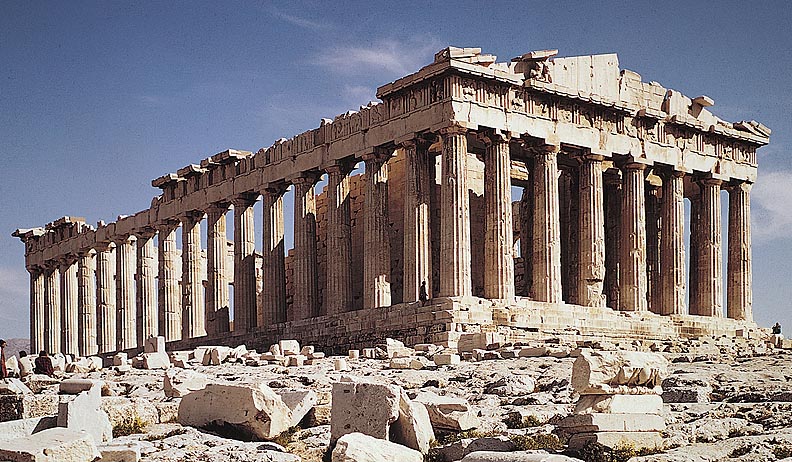
Even more often, I mix the Pantheon up with the Parthenon.
Slovenia and Slovakia are a constant challenge that might not be worth it. For me. Personally.
Recently I read a poem called "Chad" about a man and his family posing for a photograph. At the end, I asked, "What does this have to do with Chad, landlocked country south of Libya, population 10 million, broad arid plains, desert in the north, lowlands in the south?"
Even more often, I mix the Pantheon up with the Parthenon.
Slovenia and Slovakia are a constant challenge that might not be worth it. For me. Personally.
Recently I read a poem called "Chad" about a man and his family posing for a photograph. At the end, I asked, "What does this have to do with Chad, landlocked country south of Libya, population 10 million, broad arid plains, desert in the north, lowlands in the south?"
Subscribe to:
Posts (Atom)